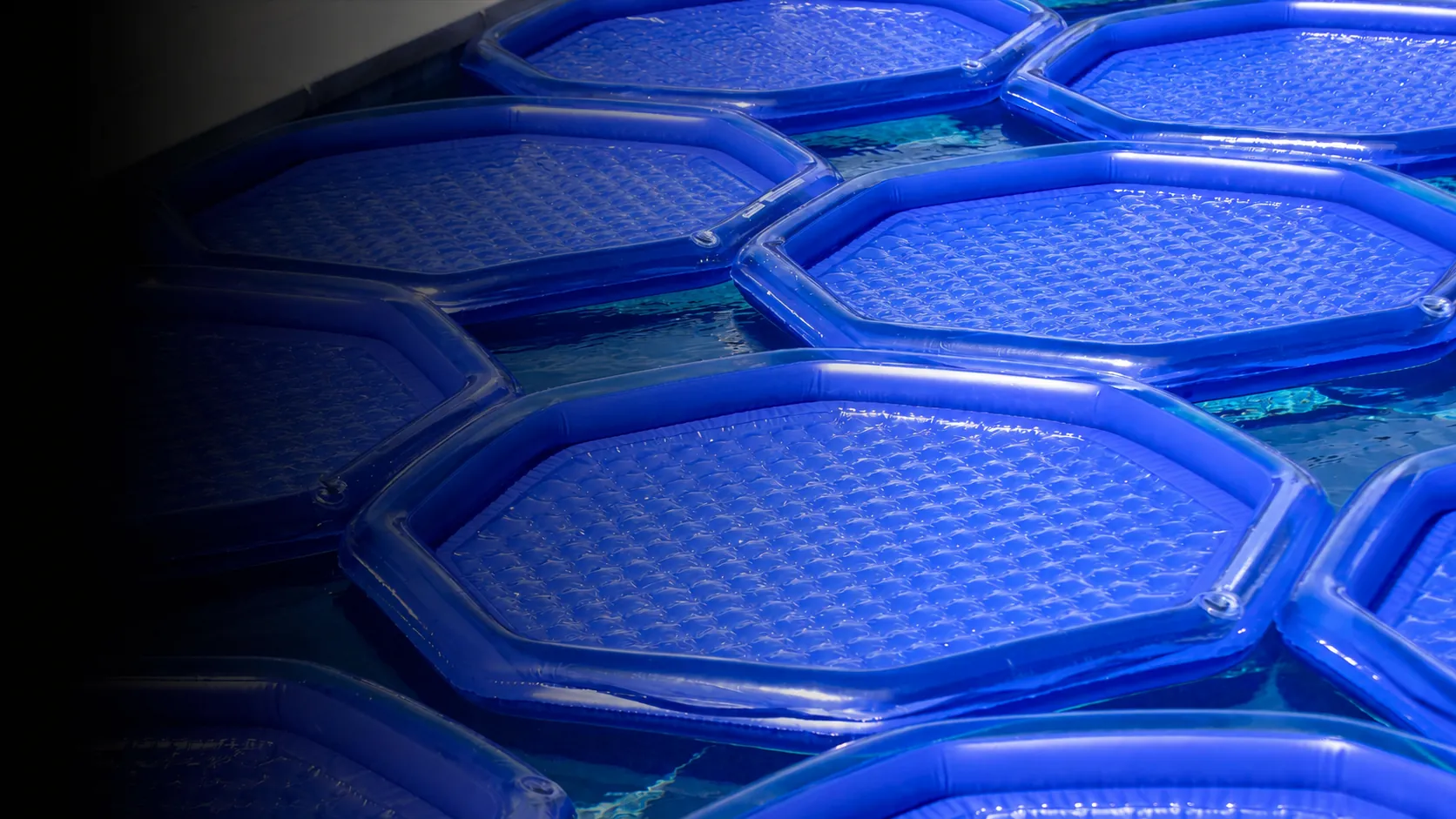
Floating solar pool heaters covering the surface of a swimming pool
Inflatable solar heating panels

Floating Solar Pool Heaters

Inflatable panels that sit on the water, absorb sunlight through the day and slow heat loss at night. Each one covers 25 sq ft. A low-cost way to stretch your swimming season at both ends.

5 × 5 ft each25 sq ft coverage3 or 12 per pack

Choose your pack

GoFloats V2 heaters come in two pack sizes. The 3-Pack suits spas and small round pools; the 12-Pack covers most full-size pools. Both are bought on Amazon.

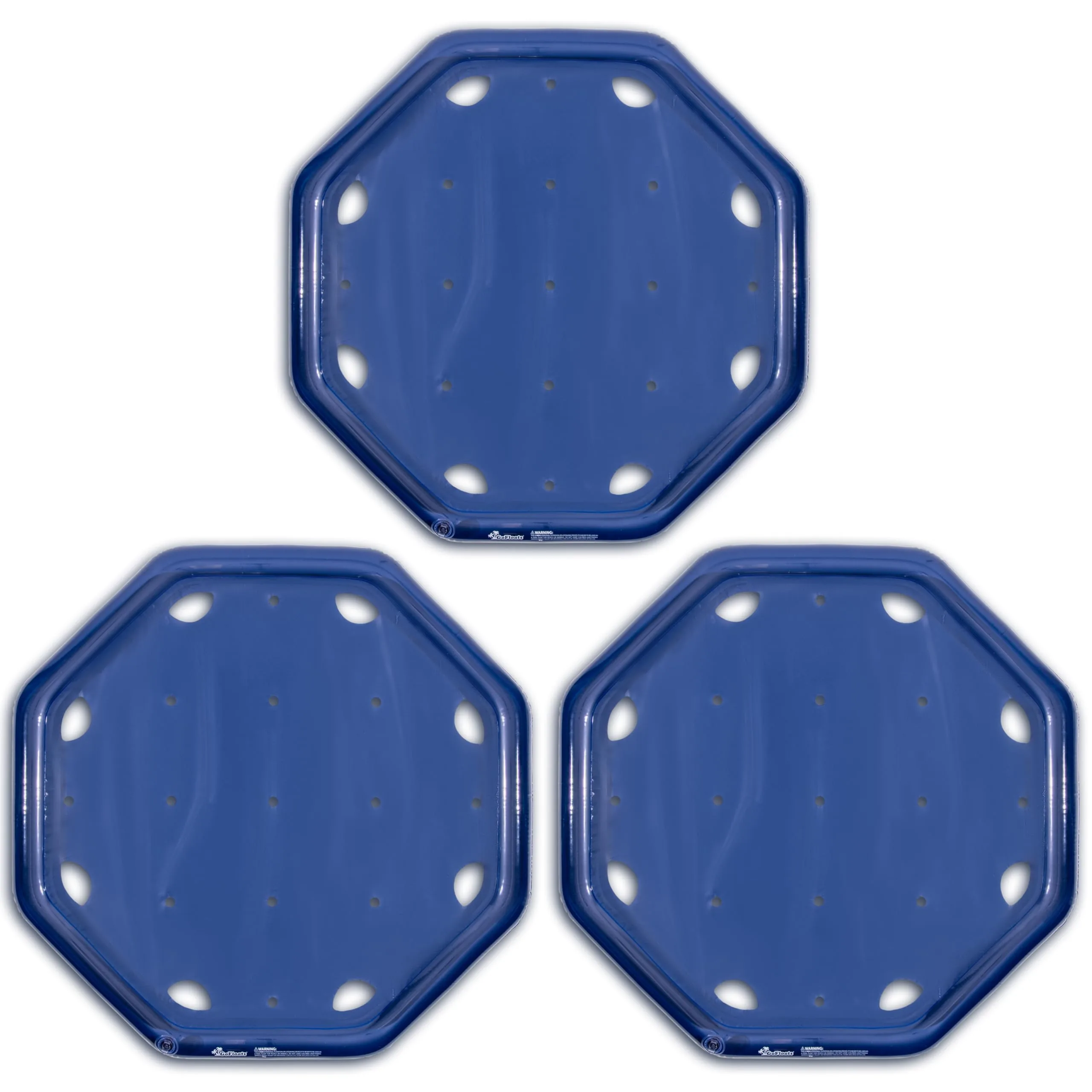
GoFloats V2 floating solar pool heaters, 3-Pack

GoFloats V2 — 3-Pack

75 sq ft total3 panels

Spas, plunge pools and round pools up to 15 ft when combined with a second pack.

Buy 3-Pack on Amazon
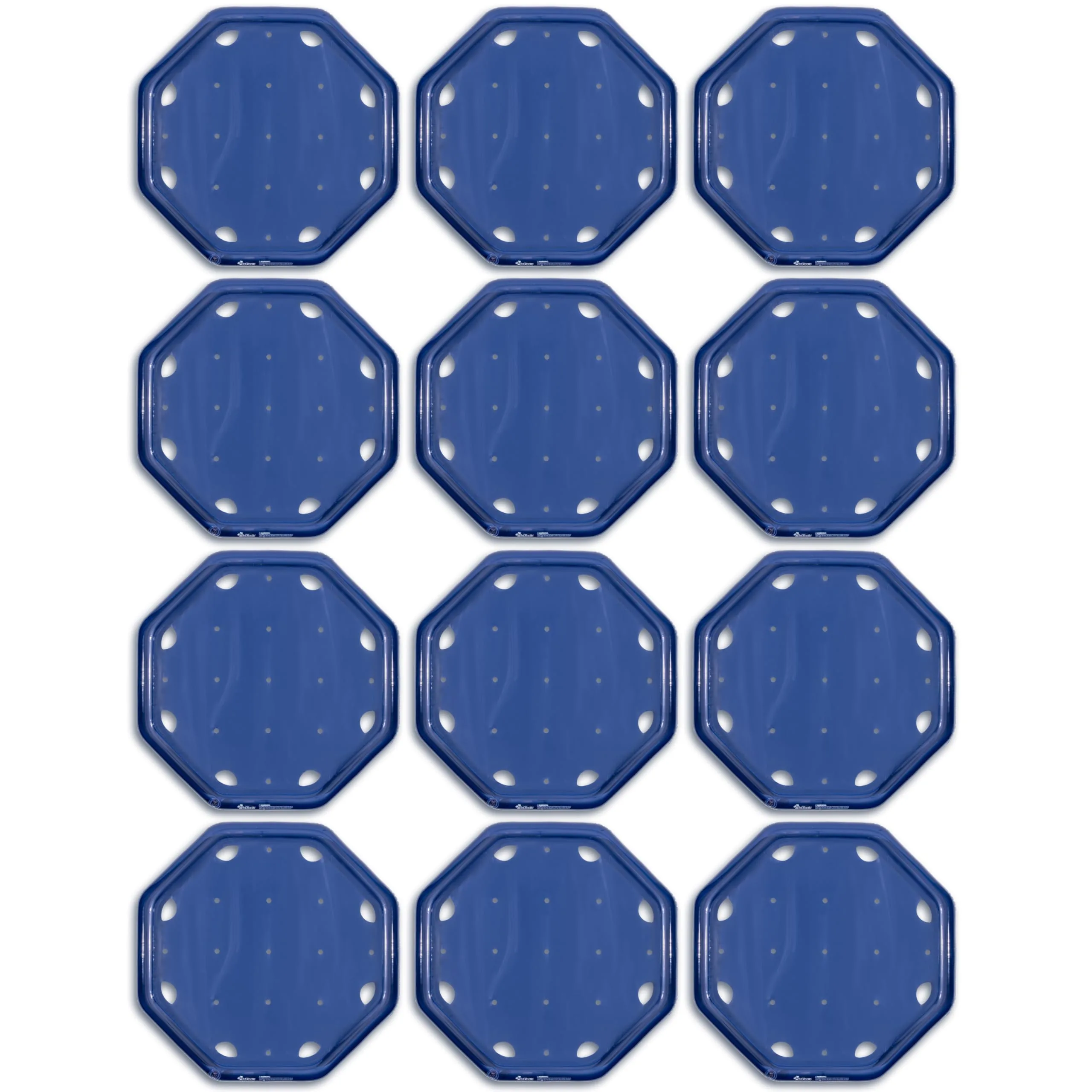
GoFloats V2 floating solar pool heaters, 12-Pack

GoFloats V2 — 12-Pack

300 sq ft total12 panels

Pools from 18 ft round upward, and the starting point for most inground pools.

Buy 12-Pack on Amazon
Coverage calculator

How many floating heaters do you need?

The manufacturer recommends covering at least 80% of the surface, and gives one formula for the count: divide your pool’s square footage by 30. A 450 sq ft pool needs 15 panels.

Round above ground pools

Pool sizeSurface areaPanelsSuggested packs
12 ft round113 sq ft42 × 3-Pack
15 ft round177 sq ft62 × 3-Pack
18 ft round254 sq ft93 × 3-Pack
21 ft round346 sq ft121 × 12-Pack
24 ft round452 sq ft1612-Pack + 2 × 3-Pack
27 ft round573 sq ft2012-Pack + 3 × 3-Pack
30 ft round707 sq ft242 × 12-Pack

Oval above ground pools

Pool sizeSurface areaPanelsSuggested packs
12 × 24 ft226 sq ft83 × 3-Pack
15 × 30 ft353 sq ft121 × 12-Pack
18 × 33 ft467 sq ft1612-Pack + 2 × 3-Pack

Rectangular inground pools

Pool sizeSurface areaPanelsSuggested packs
12 × 24 ft288 sq ft101 × 12-Pack
14 × 28 ft392 sq ft1412-Pack + 3-Pack
16 × 32 ft512 sq ft1812-Pack + 2 × 3-Pack
18 × 36 ft648 sq ft222 × 12-Pack
20 × 40 ft800 sq ft272 × 12-Pack + 3-Pack

Why divide by 30 when each panel covers 25 sq ft? The panels are octagonal, so a tight grid still leaves a small gap where four corners meet. The divisor accounts for those gaps and for the border along the pool wall. Counts are rounded up.

The physics

How floating solar heaters work

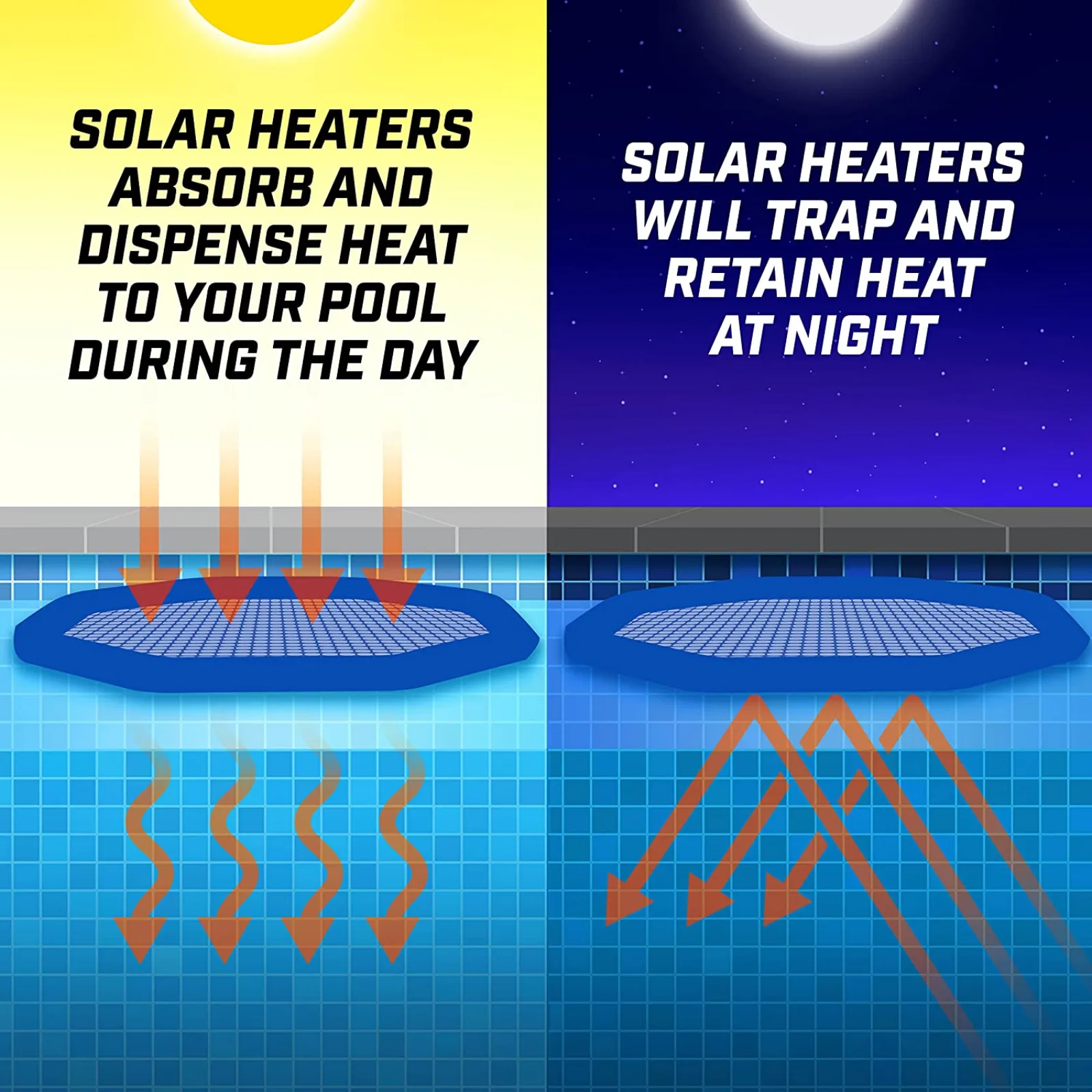
They do two jobs: collect solar heat during the day, and cut heat loss at night. The second matters more than most buyers expect.

Diagram showing floating solar heaters absorbing heat by day and holding it at night
1,048Btu of heat carried away by every pound of 80°F water that evaporates, per the US Department of Energy
50–70%Cut in pool heating costs the Department of Energy attributes to covering a pool when it is not in use
80%Surface coverage the manufacturer recommends for the panels to do their job

Daytime solar gain

The dark surface absorbs sunlight and passes the heat into the water directly beneath it. The textured air pockets increase the area in contact with the water, so the transfer happens across the whole panel rather than at a few points. Open water gains solar heat on its own, so the daytime difference between a covered and an uncovered patch is real but modest. Most of what you feel by evening came from the sun either way.

Nighttime heat retention

At night the panels earn their keep. Evaporation is the largest single route by which a pool loses heat, and every pound of water that evaporates carries away more than a thousand Btu. A floating panel physically blocks that exchange on the surface it covers, so the water underneath holds on to the temperature it reached during the day. This is the mechanism behind the Department of Energy figure for covering a pool when it is not in use.

Why 80% coverage matters

Evaporation continues on every square foot of open water, so the benefit scales almost directly with how much you cover. Half the surface covered blocks roughly half the evaporative loss. Eighty percent is the point where most of the water is protected while the panels still float freely and shift out of each other’s way. Pushing past that means panels riding up on top of one another, which covers no extra water.

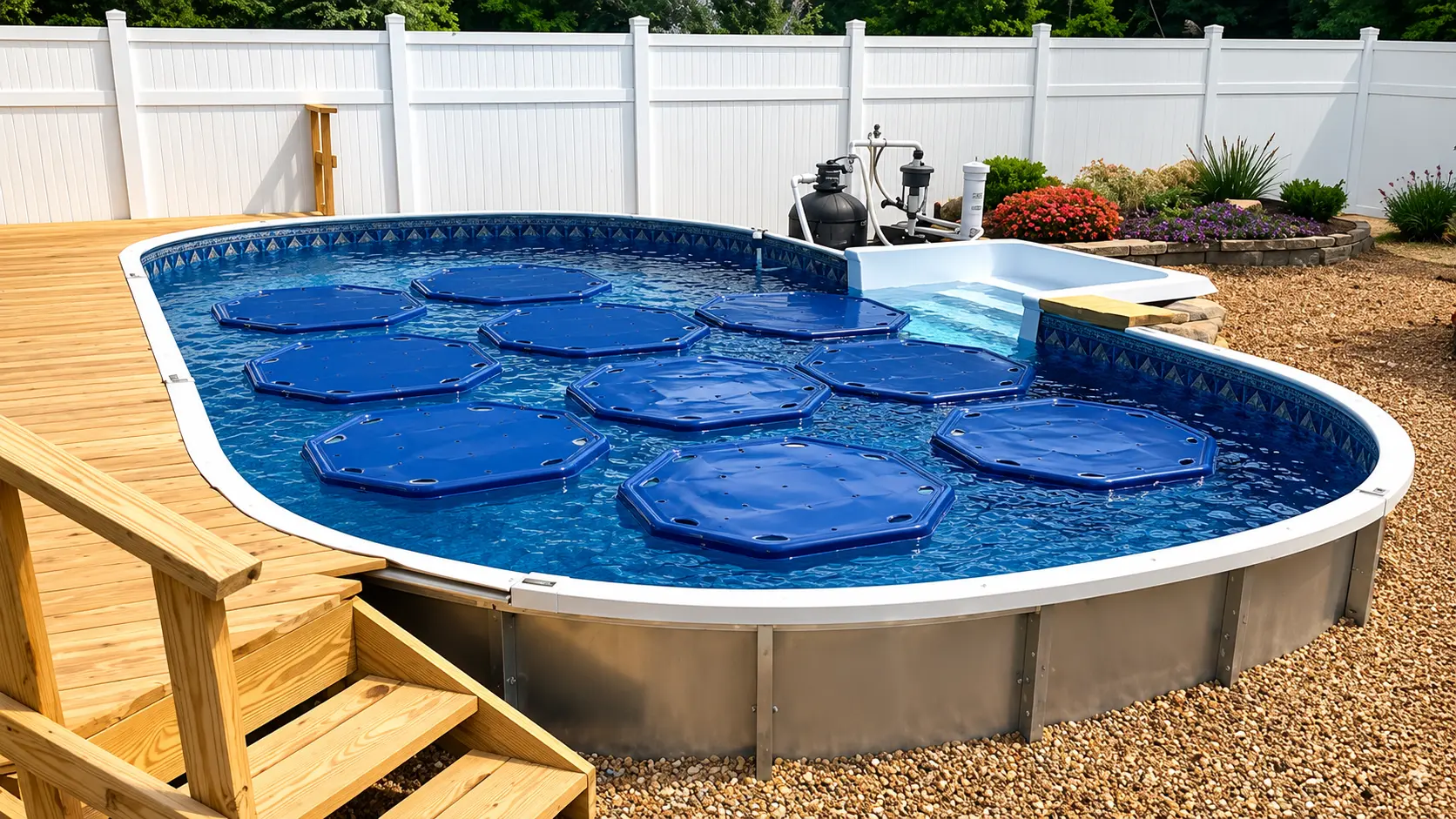
Solar pool heater for above ground pools

Above ground pools gain the most from floating solar heaters. Their water volume is smaller relative to surface area, so the same sunlight raises the temperature faster than in a deep inground pool. Their walls also sit exposed to the air on every side, which speeds up overnight cooling, and blocking evaporation offsets a larger share of that loss.

Above ground pool covered with floating solar pool heaters

How many for a 15, 18, 21 or 24 ft round pool

A 15 ft round pool needs 6 panels, an 18 ft pool 9, a 21 ft pool 12, and a 24 ft pool 16. The full breakdown including oval sizes is in the coverage table above. Up to 15 ft, two 3-Packs cover it. From 21 ft upward the 12-Pack works out cheaper per panel, and you top up with 3-Packs to reach the exact count. Round up rather than down: a pool sitting at 70% coverage loses noticeably more heat overnight than one at 80%.

Round versus oval coverage

Round pools waste less panel area. Octagonal panels fill a circle with fewer awkward edges than a stretched oval, where the narrow ends stay partly open however you arrange them. On an oval, treat the table count as a minimum and expect to add a panel or two at the ends.

Round above ground pool with floating solar heaters on the water

Intex and Bestway pools

The panels float freely and touch nothing but water, so they fit any brand of above ground pool, including Intex and Bestway frame and inflatable models. The only number that matters is the water surface area. Measure the actual water rather than the advertised pool size: an inflatable top ring sits over the water and takes a foot or more off the usable surface around the whole edge.

Why above ground pools benefit most

Above ground pools both warm up and cool down faster than inground pools, because there is less water to heat and no surrounding earth holding the temperature steady. Floating heaters work that swing in your favour twice a day, adding heat through the afternoon and holding it overnight. In practice this extends the comfortable swimming window by a few weeks at each end of the season. How many weeks depends on your climate, how sheltered the yard is, and how much of the surface you keep covered.
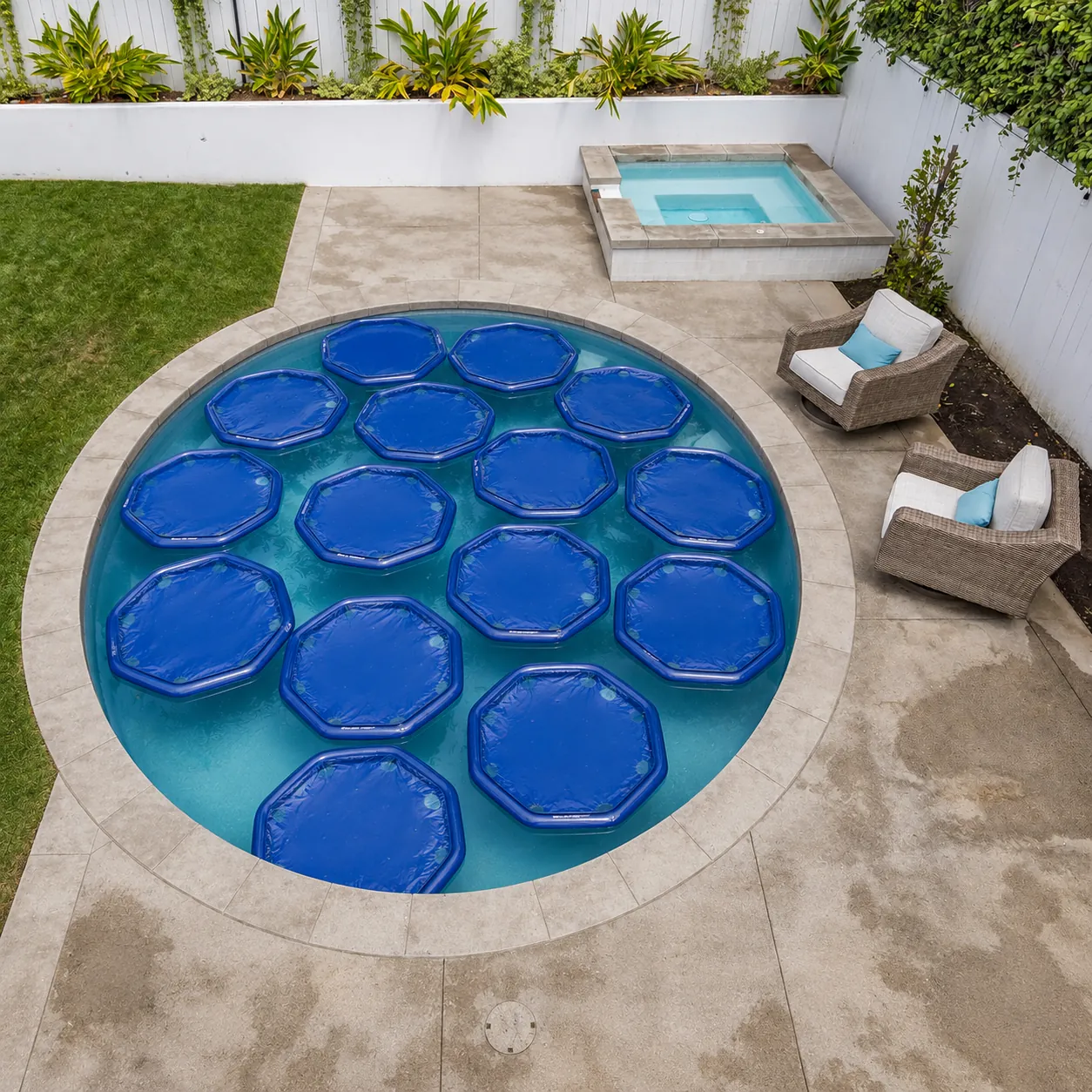
Floating solar heaters covering an inground pool, seen from above
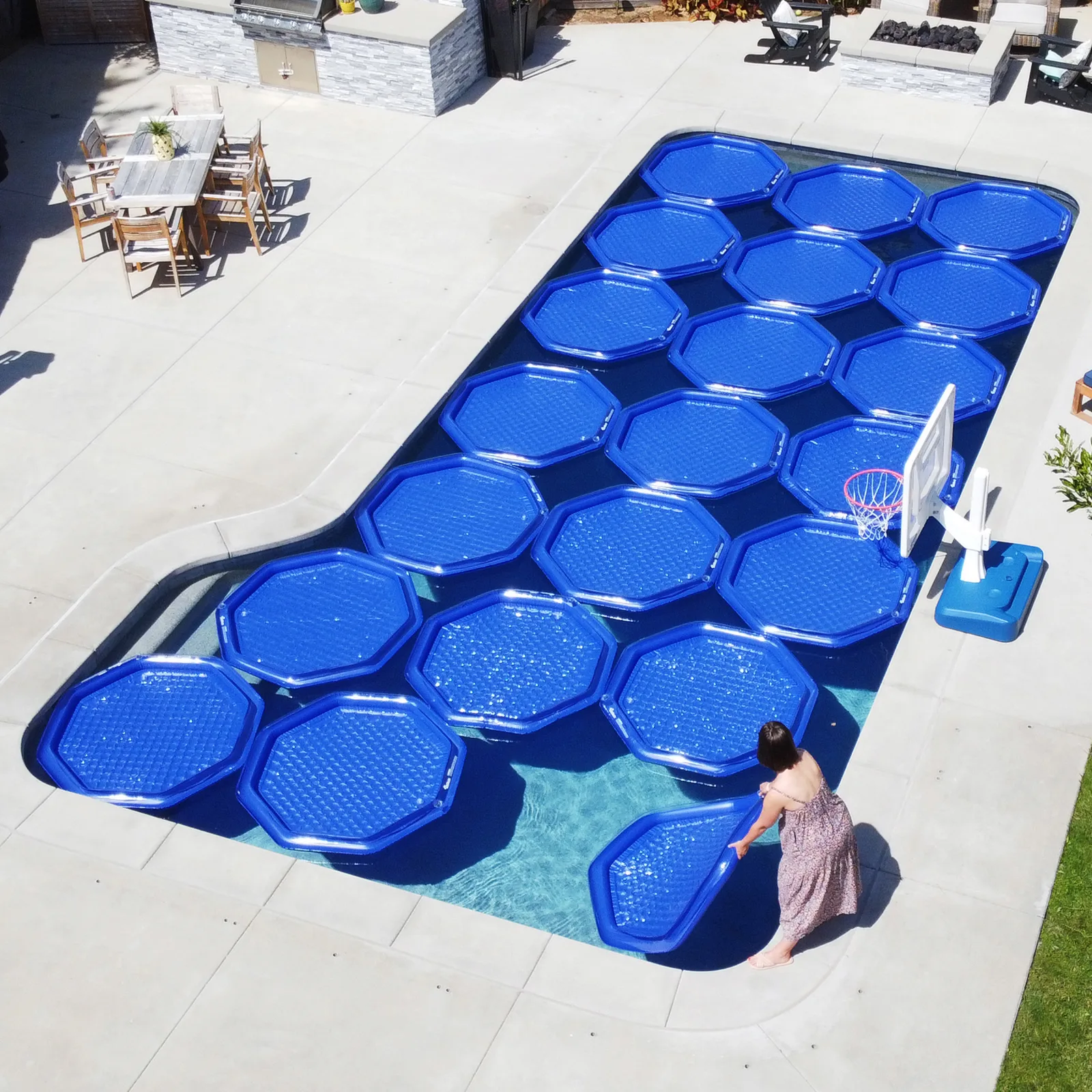
Full coverage of an inground pool: about twenty panels, placed one by one.

Can you use them on an inground pool?

Yes, with one honest caveat: the quantity adds up. A 16 × 32 ft pool has 512 sq ft of surface and needs 18 panels — a 12-Pack plus two 3-Packs, laid out by hand every time you close the pool for the day.

When it makes sense

To stretch the season without plumbing work, to cut the runtime of a gas heater you already own, or on a small pool. On a spa, three panels cover most of the surface.

When a panel system is better

A plumbed solar collector heats through the existing pump loop and needs no daily handling. For a consistently warm 500+ sq ft pool, that or a heat pump does what floating panels cannot.

3-Pack or 12-Pack?

Both packs contain the same panel. The difference is count and price per panel.

3-Pack12-Pack
Panels312
Total coverage75 sq ft300 sq ft
Best forSpas, plunge pools, up to 15 ft round18 ft round and up, most inground pools
Swimming pool surface covered with multiple floating solar heater panels

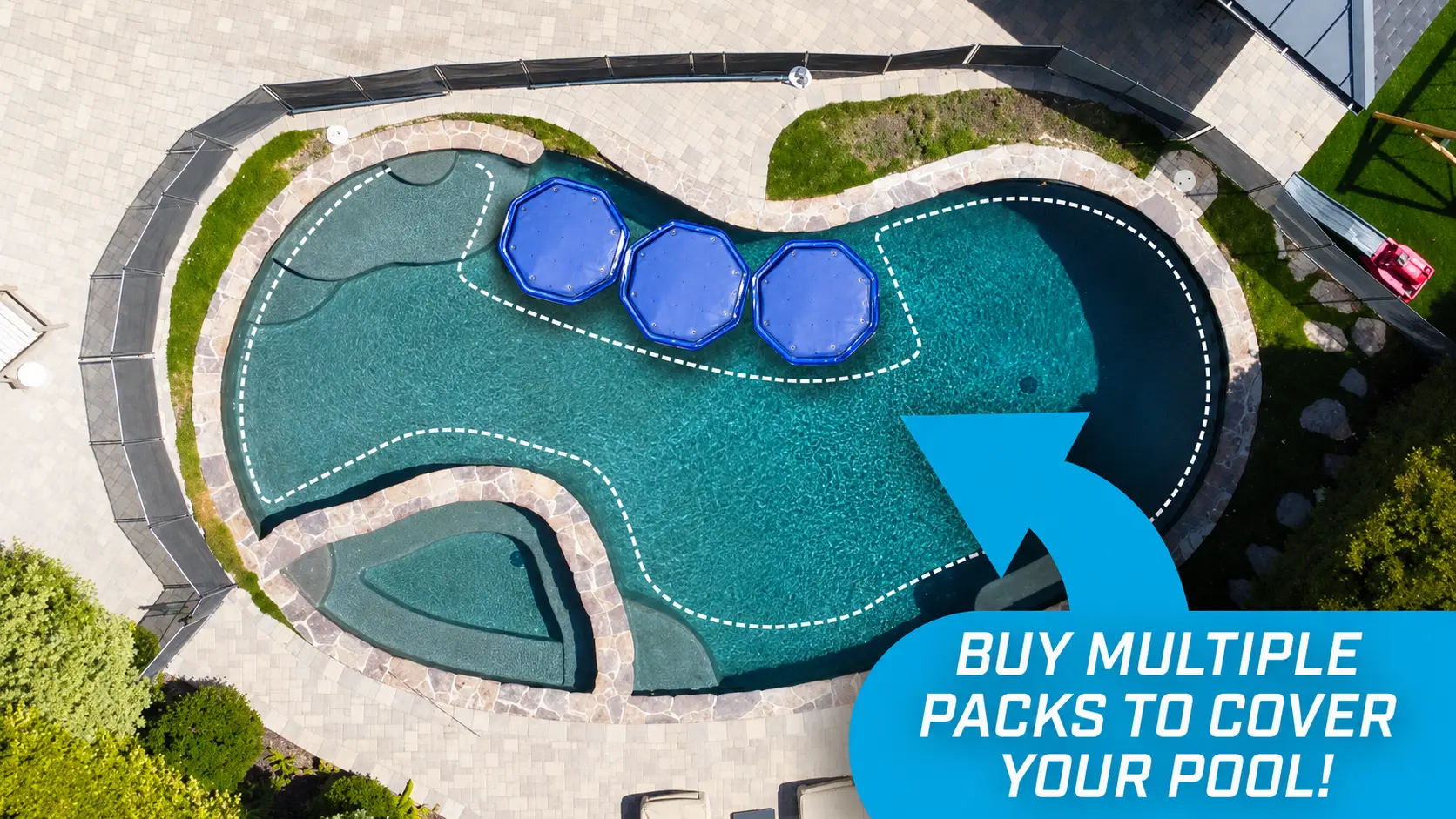
Below 15 ft round, combine 3-Packs. At 21 ft or larger, start with a 12-Pack and top up with 3-Packs to reach the count in the table.

Do they actually work?

They raise water temperature by a few degrees and slow overnight cooling. They do not replace a powered heater. How much you gain depends on climate, sun exposure, wind and how much of the surface you cover.

What affects results

Coverage is the biggest factor, since evaporation continues on open water. Wind matters almost as much: Department of Energy materials note that a 7 mph breeze across the surface can triple the energy a pool loses. Sun hours, air temperature and pool depth set the ceiling.

What they will not do

They will not heat a pool in cold or overcast weather, will not warm a large pool by ten degrees, and will not stay put on a windy day without help. Treat them as a season extender and an evaporation barrier with a modest daytime bonus.

Before you buy

  • Measure your pool surface in square feet — it sets both the panel count and the real cost.
  • Judge how exposed your yard is. Open, windy sites need the water trick below and will still see panels drift.
  • Find somewhere dry and out of sunlight to store twelve deflated panels over winter.
  • Be honest about the daily routine: panels come out before every swim and go back afterwards.
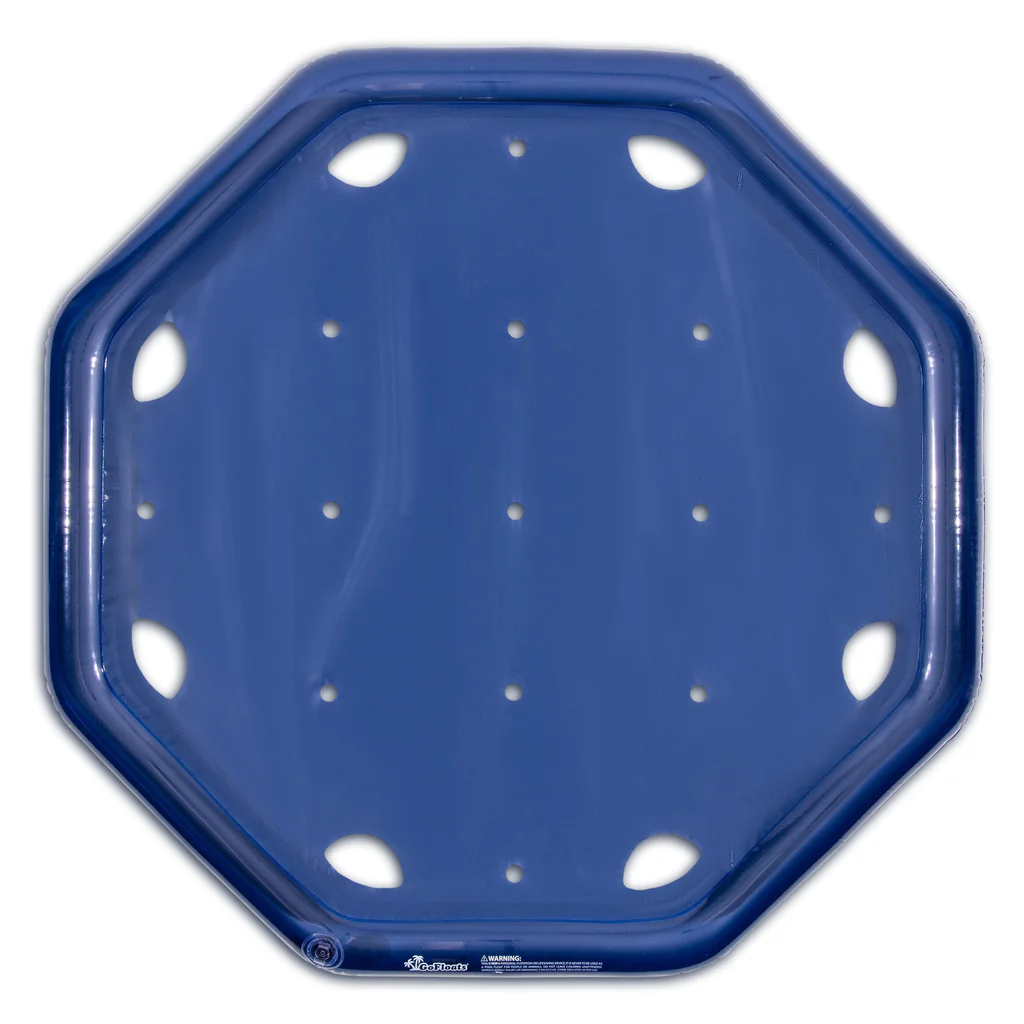
Close-up of a single octagonal floating solar pool heater panel

Setup, storage and care

Setup takes minutes per panel and needs no tools or plumbing.

Inflating and placing

Inflate through the valve. The manufacturer states its Rapid Valve design inflates ten times faster than a standard one, and recommends an electric pump rather than lung power. Inflate until firm but not hard: an overfilled panel domes in the middle and rides higher in the water, which gives the wind more to push against. Lay the panels on the water in a loose grid, dark side up, and let them settle. The manufacturer’s own tip solves the wind problem: pour a little water on top of each panel to weigh it down.

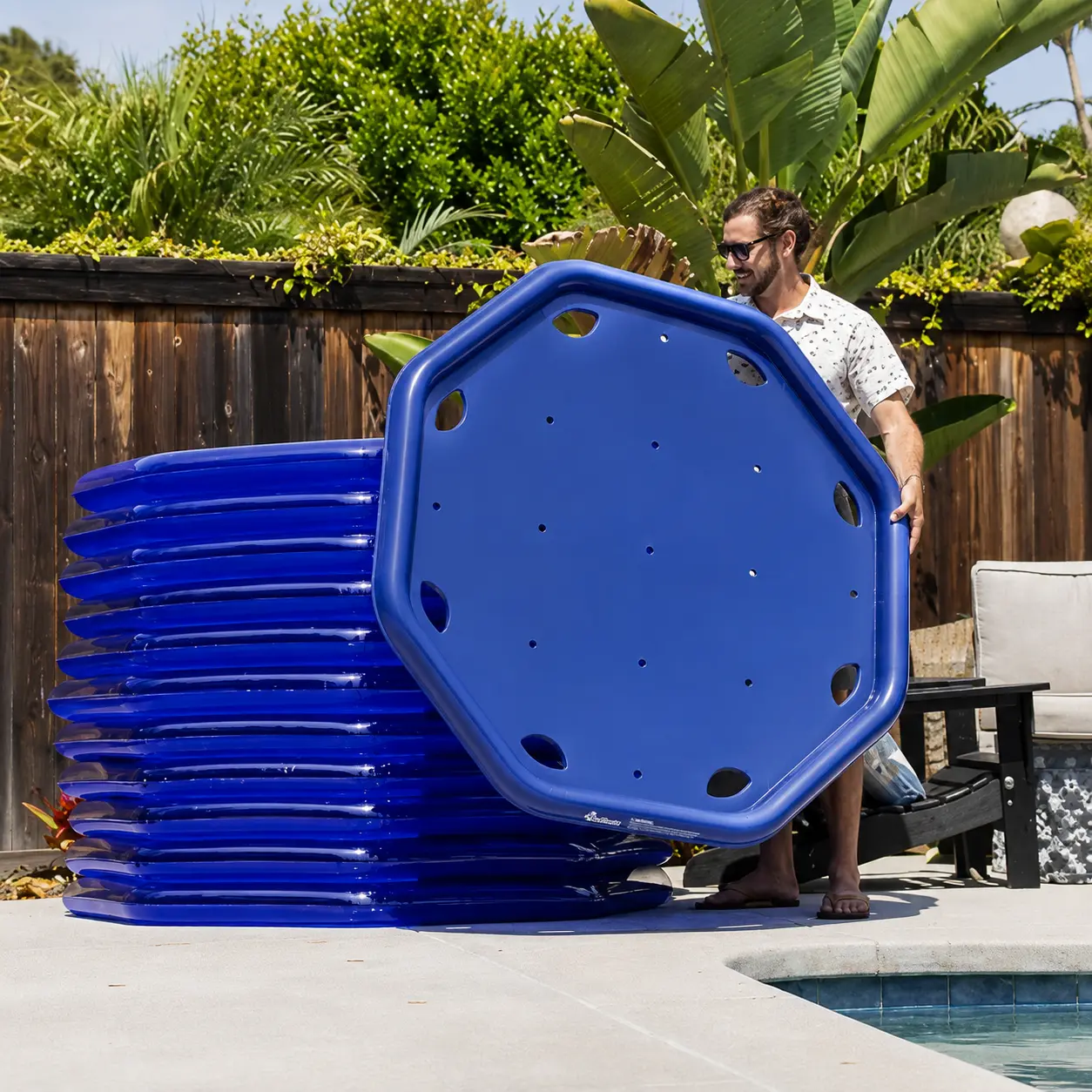
Person holding a floating solar pool heater panel at the poolside

Removing before swimming

Take the panels out before anyone gets in. Slide each one to the edge and lift. A panel holds air and a film of water and little else, so the weight stays manageable for one person. Stack them flat on the deck clear of foot traffic, and out of direct sun if the stack will sit there for hours.

Off-season storage

Deflate, dry fully, fold flat. Moisture trapped inside a folded panel breeds mildew over a winter in storage, and that stain does not come out. Keep them away from direct sunlight and freezing temperatures. UV exposure ages the vinyl faster than anything that happens while the panels are in the water.

Floating heaters versus a solar cover

Both fight the same enemy — evaporation — with different trade-offs.

Floating heatersSolar cover
Coverage80% target, gaps between panelsUp to the full surface
HandlingPanel by panelOne piece, a reel helps
FitAny shape, no cuttingCut to shape, one pool only
Partial useScale the count to budgetAll or nothing
WindCan drift; water weight helpsStays put once trimmed
StorageDeflate and foldBulky roll

A trimmed blanket covers more surface and blocks more evaporation. Floating panels win on flexibility: they fit any shape out of the box, scale with budget, and one person handles them without a reel.

Frequently asked questions

Do floating solar pool heaters really work?

They raise water temperature by a few degrees in sunny weather and cut overnight heat loss by blocking evaporation, which the Department of Energy identifies as the largest source of pool heat loss. They do not match a gas heater or heat pump in cold weather.

How many do I need for my pool?

Divide your pool’s surface area in square feet by 30. An 18 ft round pool needs 9 panels; a 16 × 32 ft inground pool needs 18. Aim for at least 80% coverage.

Can I leave them in while swimming?

No. Remove them before anyone enters the pool and put them back afterwards. Panels left in during swimming get pushed around, folded and damaged at the seams.

Will they blow away in the wind?

On an exposed site, unweighted panels drift and can flip. The manufacturer recommends pouring water on top of each panel to hold it down. A fence or hedge cuts both drift and evaporation.

Do they work on above ground pools?

Yes, and above ground pools respond best because of their smaller water volume and exposed walls. They fit Intex and Bestway pools; only the water surface area matters.

How long do they last?

Lifespan depends on UV exposure and handling more than on time in the water. Drying before storage and keeping them out of direct sun in the off season extends their life; rough decks and pool edges shorten it.

Where to buy

Check the coverage table for your pool, pick the pack combination, and complete the purchase on Amazon.

GoFloats V2 3-Pack 12-Pack